
The Upside Down Kingdom: What the Beatitudes Really Say About Who God Blesses
By Nancy Duarte. Transformational Coach, Bible Teacher, Victim Advocate

If you have ever felt overlooked, exhausted, grieving, or like you are standing at the back of the line in life, this one is for you.
The Beatitudes in Matthew 5:1-12 may be the most famous words Jesus ever spoke. They may also be the most misunderstood.
We stitch them on pillows. We print them on bookmarks. And in doing so, we miss what they actually were: an earthquake. Twelve verses that flipped the world’s entire ranking system on its head.
I know that ranking system personally. I spent years of my own life feeling like I was at the back of it, and I have spent three decades sitting with women who felt the same way. So let me show you what these verses really say.
The World These Words Landed In
The Setting on the Hillside
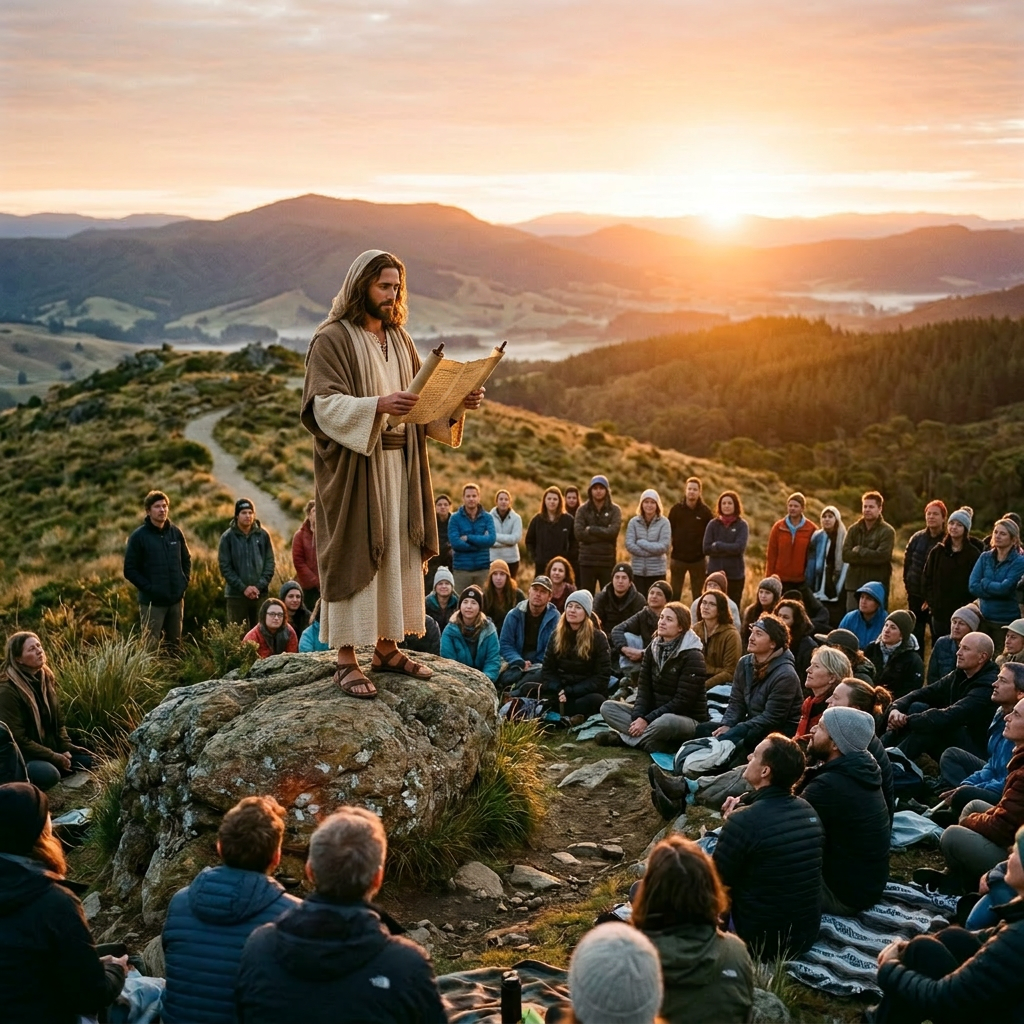
It is roughly AD 28 to 30, early in Jesus’ ministry, on a hillside in Galilee near Capernaum.
Matthew tells us that when Jesus saw the crowds, He went up the mountainside and sat down. That was the posture of a rabbi about to teach with authority. Then He began the greatest sermon ever preached. The Beatitudes are its opening lines.
Who Was in the Crowd
Matthew 4 tells us exactly who had been following Him: the sick, the suffering, the paralyzed, the poor. Ordinary peasants, fishermen, widows, and day laborers.
The religious elite had a name for these people: the am ha’aretz, meaning the people of the land. They used it the way people use insults. Unwashed. Unlearned. Unblessed.
Life Under Pressure
Life was crushing these people from every direction.
Roman occupation. Israel was a conquered nation. Soldiers filled the streets, and taxes, by some estimates, devoured a third or more of a peasant family’s income. A Roman soldier could legally force you to carry his pack a mile.
Corrupt power. Herod Antipas ruled Galilee as a puppet of Rome. He is the same Herod who would later behead John the Baptist. Justice belonged to whoever could afford it.
Religious burden. The Pharisees taught that the blessing of God had to be earned through flawless rule-keeping. Hundreds of regulations. Ordinary people were made to feel permanently unclean, permanently behind, permanently unblessed.
A dangerous theology. Most people believed a blessing meant wealth, health, and status. They believed that suffering proved God’s disapproval. So the poor and the grieving carried a double weight: their pain, plus the belief that their pain was evidence that God had rejected them.
Does that sound familiar? I have met so many women who carry that exact double weight today. The wound itself, and then the whisper that the wound must somehow be their fault.
The Messiah They Expected
The people were desperately waiting for a Messiah. But they expected a warrior king who would crush Rome. They wanted a sword.
Jesus opened with a blessing.
Why Matthew Tells It This Way
Matthew wrote primarily for Jewish readers, and he paints the scene deliberately: Jesus as the new and greater Moses.
Moses went up a mountain to receive the Law. Jesus went up a mountain to deliver the heart of the new covenant. Moses came down with the commandments carved in stone. Jesus opened with blessings aimed at broken hearts.
What “Blessed” Actually Means
The word blessed is the Greek word makarios. It means far more than happy. It means divinely favored, deeply well, enviably whole. A settled joy that circumstances cannot manufacture and cannot take away.
Now hear the shock of it: Jesus looked at the very people society ranked last, and declared them first.
Before we walk through them, I would love to hear from you: if you had been in that crowd, which group would you have belonged to? The grieving? The exhausted? The overlooked? Tell me in the comments. Just one word is enough.
The Eight Beatitudes, in Human Terms

Jesus taught in pictures, because pictures reach places definitions cannot. So, for each beatitude, here is what it means, and a picture from everyday life to carry it home.
1. Blessed Are the Poor in Spirit
“Blessed are the poor in spirit, for theirs is the kingdom of heaven.” (verse 3)
What it means. This is not about your bank account. It is about your posture before God. Poor in spirit means you know you cannot save yourself, fix yourself, or earn your way in.
The picture: the emergency room. Nobody walks into the ER and gets treated by proving how healthy they are. The only ticket in is admitting something is wrong. The person who insists everything is fine goes home untreated.
The Kingdom works the same way. The entrance requirement is empty hands. The person who arrives saying, “I have nothing, I need everything,” is the one who gets the whole Kingdom.
I remember the season of my own life when I finally stopped performing strength and admitted to God that I was empty. It felt like failure. It turned out to be the doorway.
Notice this is the first beatitude on purpose. It is the doorway to all the others.
Reflection: Where in your life are you still telling God you are fine when you are not? What would it look like to walk into His ER, honestly, this week?
2. Blessed Are Those Who Mourn
“Blessed are those who mourn, for they will be comforted.” (verse 4)
What it means. Jesus blesses grief. Grief over our losses, our sin, and what is broken in the world. In a culture that said suffering proved the rejection of God, Jesus says the mourners are the ones God moves toward.
The picture: the covered wound. A wound cannot be stitched while it is still covered. The surgeon can only heal what is opened to her. Mourning is the opening.
The person who lets themselves grieve is not falling apart. They are finally holding still long enough to be treated.
And here is the tender part: grief is really love with nowhere left to go. God does not waste it. The Greek word for comforted is related to the very word Jesus uses for the Holy Spirit, the Comforter who comes alongside.
In my years of coaching, the women who healed deepest were never the ones who skipped the grief. They were the ones who finally let it come.
Reflection: What have you not allowed yourself to fully grieve? A person, a marriage, a season, a version of your life? What would it mean to believe comfort is promised on the other side of the tears, not instead of them?
3. Blessed Are the Meek
“Blessed are the meek, for they will inherit the earth.” (verse 5)
What it means. Meek does not mean weak, mousy, or doormat. The Greek word praus denoted a trained warhorse. All of its power is still there, but under control.
The picture: two horses. A wild stallion has power but no direction. It tramples everything, including itself. A trained warhorse has the same power, but is bridled. It moves when the master says “move” and stands calm amid the chaos of battle.
Meekness is strength under the bridle of God. The world says grab the earth by force. Jesus says that those who surrender their power to God end up inheriting everything the grabbers fought over.
Reflection: Where are you using your strength like the wild stallion, forcing, controlling, defending? What would it look like to keep the strength but hand God the reins?
4. Blessed Are Those Who Hunger for Righteousness
“Blessed are those who hunger and thirst for righteousness, for they will be filled.” (verse 6)
What it means. Blessing belongs not to those who have achieved righteousness, but to those who ache for it. The appetite itself is the blessing.
The picture: snacking versus a feast. You can snack all day and never be nourished. Chips, sugar, empty calories. Full stomach, starving body.
That is what we do with approval, shopping, scrolling, and relationships: empty calories for the soul. I did it for years with relationships that could never feed me. Maybe you have too.
Hunger is actually a gift. It tells you what you truly need. Jesus says the person who stops filling up on junk and starts craving what is real gets filled. Not partially. The word means satisfied like a feast.
Reflection: What have you been snacking on to avoid feeling your real hunger? If you are honest, what is your soul actually starving for?
5. Blessed Are the Merciful
“Blessed are the merciful, for they will be shown mercy.” (verse 7)
What it means. Mercy is compassion in motion. Forgiving those who wronged us and helping those who cannot repay us. And Jesus reveals a spiritual law: mercy flows back to the one it flows through.
The picture: the pipe. A pipe open at both ends lets water flow through and keeps it clean. A pipe capped on one end just fills up and corrodes.
When we receive God’s mercy but refuse to pass it on, we cap the pipe. And bitterness corrodes us from the inside.
One important word, especially if you have been hurt deeply: mercy does not mean removing boundaries or staying in harm’s way. You can release a debt from a safe distance. Mercy is about your heart being free, not about their access being restored. I teach this to every woman I coach, and it changes everything.
Reflection: Who are you holding a debt against, and what is carrying that debt costing you? Is there a capped end in your pipe?
6. Blessed Are the Pure in Heart
“Blessed are the pure in heart, for they will see God.” (verse 8)
What it means. Pure here means unmixed, undivided, like pure gold or pure water. It is not sinless perfection. It is a heart with one loyalty instead of ten competing ones.
The picture: the windshield. When your windshield is clean, you forget it is even there. You just see the road. But let it get covered in grime and fog, and you can be driving in broad daylight and see nothing clearly.
God has not moved. He has not hidden. But a heart smeared with divided loves, part for God, part for approval, part for control, part for an old relationship, cannot see Him clearly through the smear.
Purity of heart is windshield cleaning: simplifying your loves until God is not one interest among many, but the One through whom you see everything else.
Reflection: What is smearing your windshield right now? What divided loyalty or distraction is making God hard to see? What is one love you need to demote this week?
7. Blessed Are the Peacemakers
“Blessed are the peacemakers, for they will be called children of God.” (verse 9)
What it means. Not peacekeepers. Peacemakers. There is a world of difference, and if you have ever walked on eggshells to keep someone calm, this one is for you.
The picture: the clutter closet. A peacekeeper shoves all the clutter into a closet before guests arrive. The house looks peaceful, but nothing has been cleaned. And the closet gets more dangerous every year.
That is appeasing. Staying silent to avoid conflict. Managing someone else’s moods.
A peacemaker is a builder. She opens the closet, does the hard work of truth-telling and repair, and builds something actually livable. Real peace, shalom, is not the absence of noise. It is the presence of wholeness.
And hear me clearly: keeping a false peace by enduring mistreatment is not this beatitude. Peacemaking sometimes requires conflict, the way a surgeon’s knife precedes healing. Jesus Himself made peace through confrontation with what was wrong.
I spent years of my life as a peacekeeper before God taught me the difference. [Personal story prompt: add a brief example of a moment you chose truth over false peace.]
Reflection: Where in your life have you been peacekeeping and managing appearances instead of peacemaking? What truth would have to be spoken for real peace to be built?
8. Blessed Are the Persecuted
“Blessed are those who are persecuted because of righteousness, for theirs is the kingdom of heaven.” (verses 10 to 12)
What it means. When you live this upside-down way, some people will not celebrate you. Some will resent you, mock you, exclude you, or slander you. Jesus says: When that happens for doing right, you are in the best company in history. The prophets.
The picture: the lamp. Turn on one lamp in a dark backyard at night and watch what happens. Everything in the darkness flies straight at it.
The light did nothing wrong. Light simply attracts opposition from those who prefer the dark.
If you have started setting boundaries, telling the truth, or walking in freedom, and suddenly certain people are angry with you, the lamp is not malfunctioning. It is working.
And Jesus does not just say endure it. He says, “Rejoice and be glad, because great is your reward in heaven.” The pushback is not proof that you took a wrong turn. Sometimes it is the confirmation that you are finally on the road.
Reflection: Have you experienced pushback from family, friends, or even church people since you started walking in truth? How does it change things to see that opposition as confirmation instead of condemnation?
Which of these eight pictures hit home for you: the ER, the wound, the war horse, the feast, the pipe, the windshield, the closet, or the lamp? Drop the one word in the comments. I read every single one.
How to Pray Like the Sermon Teaches: Ask, Seek, Knock

Here is something beautiful: just two chapters later in the very same sermon, Jesus taught us how to pray for all of this.
“Ask, and it will be given to you; seek, and you will find; knock, and the door will be opened to you.” Matthew 7:7
That is not one instruction. It is three deepening levels.
Level One: Ask
Ask in prayer with your voice. Name the need plainly. Not hinting. Not earning. God is not impressed by fancy words. He is moved by honest ones.
Level Two: Seek
Seek is prayer with your attention. After you ask, keep looking. Stay alert for His answer in Scripture, in circumstances, in wise counsel. Do not drop the request and walk away. Watch for the reply.
Level Three: Knock
Knock is a prayer with your persistence. Knocking is repeated. It makes noise. It stands at the door and does not leave.
Some answers only come to the one who keeps knocking. Not because God is reluctant, but because persistence changes us while we wait.
Think of it like this: ASK is texting a trusted friend for help. SEEK is watching for her reply. KNOCK is standing on her porch because you know she is home.
In the original language, the verbs mean keep on asking, keep on seeking, keep on knocking. Prayer is not a suggestion box. It is a doorstep we are invited to live on.
And notice how it connects to where we started: the whole sermon begins with blessed are the poor in spirit, the ones who know they need. Asking is not a weakness. Asking is the front door of the Kingdom.
The Big Picture: A Staircase, Not a List
Step back and look at the whole thing. The Beatitudes are not eight random blessings. They are a progression.
It begins with empty hands. It moves through honest grief, surrendered strength, and deep hunger. It grows outward into mercy, purity, and peacemaking. And it ends with a person who shines so differently that the world pushes back.
Notice something remarkable: at both ends, the first beatitude and the last, the promise is identical. Theirs is the kingdom of heaven. The Kingdom bookends the whole journey. It is yours at the start and yours at the end.
Here is what I want you to carry away from this. The world hands out its blessings by ranking. The prettiest, the richest, the most put together. Jesus stood on that hillside, looked at the overlooked, and tore up the ranking sheet.
The ones the world called last, He called blessed.
So if you have ever felt poor, grieving, overlooked, hungry, or pushed aside, you were never at the back of the line with God. You were at the front.
Your worth was never negotiable. And in the Kingdom, it never even entered negotiations.
Go Deeper: Questions for Your Journal

Take these to your journal, your small group, or the comments below. Each one connects to what we just walked through.
- Which beatitude felt like it was written directly to your life right now, and why?
- Which one is hardest for you to believe is really a blessing? What makes it hard?
- The crowd expected a warrior Messiah and got a blessing Messiah. Where have you been expecting God to act one way while He is answering in another?
- Which analogy stuck with you the most: the ER, the warhorse, the windshield, the closet, or the lamp? What is it showing you about your own walk?
- What is the ONE request you will ask, seek, and Knock on this week, and which beatitude gives you the courage to keep knocking?
Your Challenge This Week: Three Simple Steps
Step 1. Read Matthew 5:1-12 out loud once a day. Each day, put your own name into one verse: “Blessed is _____ when she mourns, for she will be comforted.” Say it until you believe it.
Step 2. Pick one prayer request and practice Ask, Seek, Knock on it every day. Ask it plainly on Monday. Keep seeking His answer all week. Keep knocking every morning. Write down anything you notice.
Step 3. Choose one beatitude and live it once this week. One act of mercy. One truth spoken for real peace. One honest grief brought to God. Just one.
Then come back to this post and tell me in the comments which step you chose and what happened. Your story might be exactly what another reader needs to keep going.
A Closing Prayer
“Lord Jesus, thank You for climbing that mountain and turning the rankings of the world upside down. Thank You that You did not bless the impressive. You blessed the honest. We bring You our empty hands, and we take You at Your word: the Kingdom belongs to people like us. Comfort everyone reading this who mourns. Bride our strength into meekness. Feed the hunger in us that nothing else has satisfied. Keep our mercy flowing, our hearts undivided, and our peace real instead of pretended. And when walking in Your truth costs us, when the pushback comes, remind us to rejoice, because we are in the company of the prophets. We ask, we will seek, and we will keep knocking, because You promised the door would open. In Jesus’ mighty name, Amen.”
Nancy Duarte is a transformational life coach, Bible teacher, and victim advocate, and the founder of Life on Earth Ministries and the Toxic Relationship Community Online. If this post spoke to you, share it with a friend who needs it, and join the community at lifecoachnancy.com and lifeonearthministries.com.

Leave a Reply